How to Build a Long-Term Technology Adaptation Plan for Your Small Business
The pace of technological change shows no signs of slowing. For small business owners, keeping up can feel overwhelming — but the ones who thrive aren't necessarily the fastest adopters. They're the ones with a plan.
Building a long-term technology adaptation plan is one of the most practical things you can do for the future of your business. It doesn't require a big budget or a tech background. It requires clear thinking, honest assessment, and a commitment to continuous improvement.
Start with an Honest Assessment of Where You Are
Before you can plan where you're going, you need to understand where you currently stand. Take stock of your business operations: What are your strengths? Where are the gaps? Where are you losing time or money to manual, repetitive processes?
This isn't just a technology audit — it's a business health check. Look at every part of your operation, from how you communicate with customers to how you manage inventory, track leads, and deliver your service. Identifying the weak points gives you a clear starting point for your adaptation efforts.
Set Specific, Measurable Goals
Once you understand your current situation, the next step is to set goals that are specific and measurable. Vague intentions like "get better at digital marketing" won't move the needle. Instead, aim for something concrete: "increase online enquiries by 20% in the next six months by launching a targeted social media campaign" or "reduce time spent on invoicing by automating the billing process."
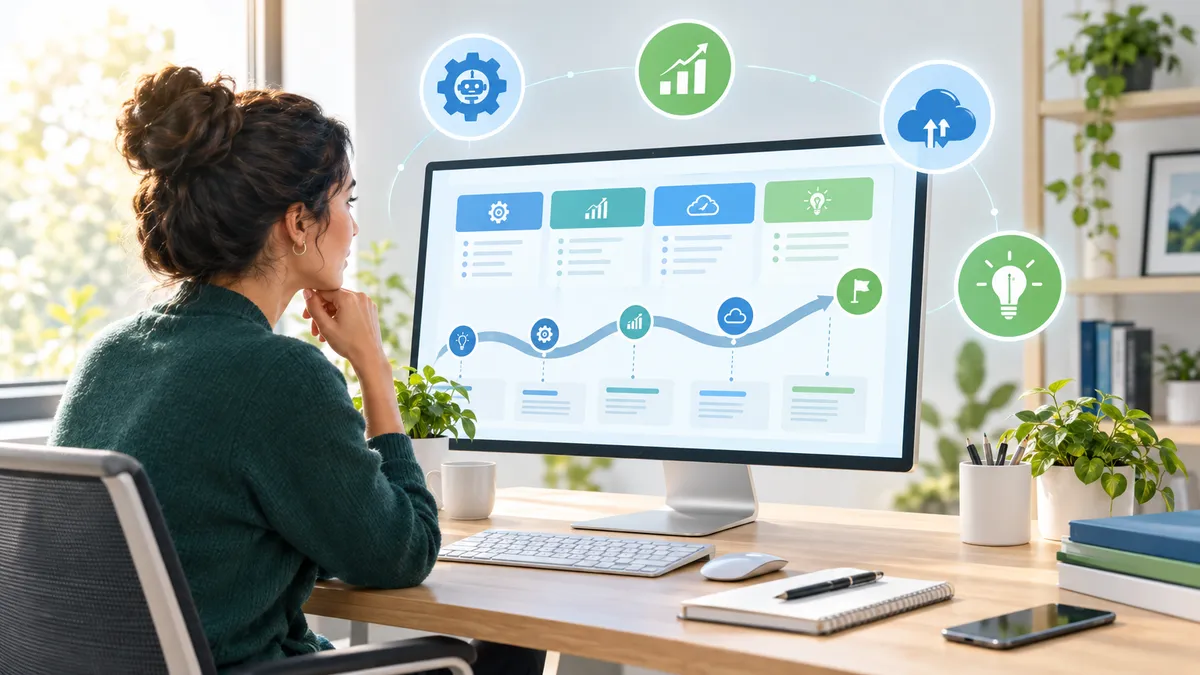
Your goals should span different parts of the business — customer engagement, operational efficiency, marketing reach, and team productivity. Each goal becomes a signpost on your adaptation roadmap, allowing you to track progress and course-correct when needed.
Identify Tasks You Can Automate
One of the highest-leverage moves any small business can make is identifying and automating repetitive tasks. Start by mapping out your daily, weekly, and monthly workflows. Look for tasks that are rule-based, time-consuming, and prone to human error — these are your best candidates for automation.
Common areas include data entry, appointment scheduling, email follow-ups, invoicing, and inventory management. Tools that automate these functions don't just save time — they reduce errors and free up your team to focus on higher-value work like strategy, creativity, and customer relationships.
When selecting automation tools, prioritise ease of use, scalability, and how well they integrate with your existing systems. The right tools should make your business run more smoothly — not add complexity.
Stay Informed on Emerging Technologies
Technology trends that seem distant today can become business-critical within months. Staying informed doesn't mean chasing every new tool — it means being proactive enough to recognise which advancements are relevant to your industry and customer base.
Engage with industry publications, attend webinars, and connect with peers in your sector. Pay particular attention to developments in digital marketing, customer service technology, and cloud-based collaboration tools. When you understand the landscape, you can make smarter decisions about when to adopt new solutions and when to wait.
Build a Culture of Innovation
A long-term adaptation plan isn't just a document — it's a mindset. Small businesses that future-proof successfully tend to have one thing in common: they've built a culture where innovation is encouraged and change isn't feared.
That means creating space for your team to share ideas, experiment with new approaches, and provide feedback on what's working. Regular team check-ins, cross-department collaboration, and a willingness to iterate are all hallmarks of a business that adapts well.
Review and Revise Regularly
Finally, no adaptation plan should be set in stone. The business environment is dynamic, and your plan needs to be too. Schedule periodic reviews — quarterly at minimum — to assess whether your goals are still relevant, whether your tools are still the right fit, and whether new opportunities or risks have emerged.
By treating your long-term adaptation plan as a living document, you ensure your business isn't just reacting to change — it's actively shaping its own future.
Ready to take the next step in future-proofing your business? Connect with Jay at meetjay.info to explore practical strategies tailored to your situation.