The Reputation Flywheel: How to Turn Reviews and Relationships Into a Revenue Engine
The Reputation Flywheel: How to Turn Reviews and Relationships Into a Revenue Engine
In today's market, your reputation does the selling — long before a potential customer ever picks up the phone or clicks "enquire now."
The businesses winning right now aren't necessarily the ones with the biggest ad budgets. They're the ones with the strongest reputations — built through consistent results, genuine relationships, and reliable follow-through. When all three come together with real visibility, something powerful happens: reputation becomes a self-feeding engine for growth.
What Is the Reputation Equation?
There's a deceptively simple framework that explains why some businesses attract clients effortlessly, while others struggle despite working just as hard:
Reputation = (Results + Relationships + Reliability) × Visibility
Every component matters. Miss one and the whole equation weakens:
- No results? You're inspirational but unproven.
- No relationships? You're talented but invisible.
- No reliability? You're seen as inconsistent.
- No visibility? You're a best-kept secret.
Balance all four, and your name becomes currency.
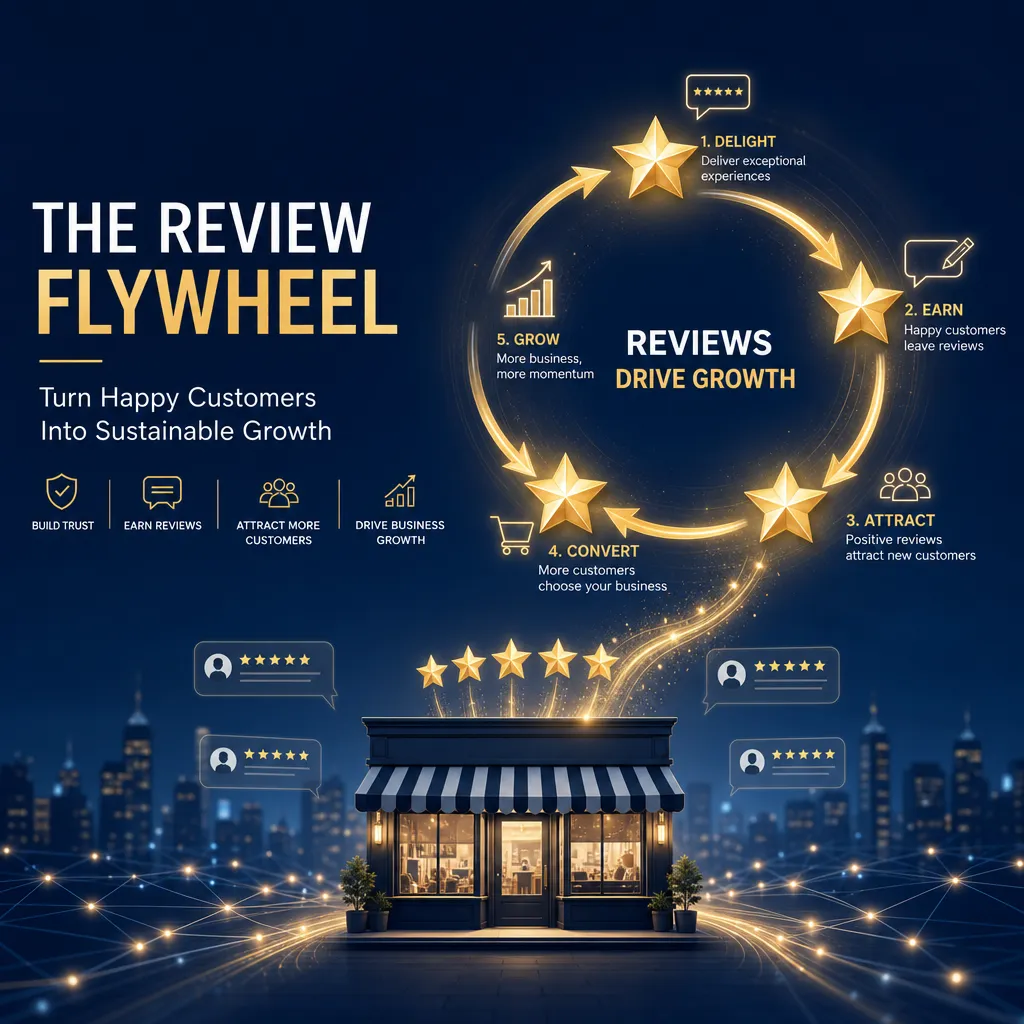
The Reputation Flywheel in Action
Reputation isn't static — it's a self-feeding cycle. Here's how it works in practice:
- Deliver value — You exceed your customers' expectations.
- Earn praise — Satisfied clients share their experience through reviews, referrals, and word of mouth.
- Gain visibility — Others discover you through their stories.
- Receive opportunities — New business flows in without heavy advertising spend.
- Repeat — Each loop strengthens the last.
Do this consistently, and your reputation starts generating momentum that compounds over time. The effort you invest today pays dividends for months and years to come.
Why Online Reviews Are the Engine Starter
Online reviews are where the flywheel gets its initial push. Reviews, testimonials, and case studies shape purchasing decisions faster than any advertisement ever could. They're not just nice to have — they're the trust signals that convert curious prospects into confident buyers.
Encouraging satisfied customers to share their positive experiences on platforms like Google is one of the highest-leverage activities a small business owner can invest time in. Make it easy by providing a direct link and a simple prompt. Customers are often happy to leave feedback — they just need to be asked.
Responding to Reviews: The Missed Opportunity Most Businesses Skip
Collecting reviews is only half the work. How you respond to them is equally important — and it's a public act that every potential customer can see.
For positive reviews, express genuine gratitude and personalise your reply by referencing specific details from what the customer shared. This signals that you pay attention, you care, and you value the relationship beyond the transaction.
For negative reviews, the approach changes — but the goal is the same. Stay calm, acknowledge the customer's experience with empathy, and focus on resolution rather than defence. Offering to take the conversation offline shows maturity and a commitment to making things right. Handled well, a thoughtful negative review response can actually strengthen trust more than a string of five-star ratings alone.
Consistency in tone across all responses also reinforces your brand identity. Whether your style is professional, warm, or conversational — keep it aligned. This consistency builds familiarity, and familiarity builds trust.
Reputation Through Service
At its core, reputation is built on one simple principle: help enough people, and they'll help you back — louder.
Every review you earn, every relationship you invest in, every promise you keep adds to a growing balance of trust. Over time, that balance becomes so large that others start spending it on your behalf — introducing you, endorsing you, referring you. That's when reputation stops being a marketing strategy and starts being a genuine competitive advantage.
The businesses with the most trusted reputations don't chase attention. They curate perception — deliberately, consistently, and generously.
Start Building Your Flywheel Today
If you're not actively managing your online reputation, you're leaving your most valuable asset to chance.
Start by asking your most recent satisfied customer for a Google review. Respond to every review you receive. And commit to delivering the kind of results and service that make those reviews easy to write.
The flywheel is already turning for your competitors. The sooner you start, the faster yours will spin.
Want help putting a system behind your reputation? Reputation Loop is built to make this effortless — from review requests to response management, all in one place.